France and the United States in Western Sahel: Cooperation and Competition in an Interlocking Conflict-Conference Presentation

france-and-the-united-states-in-western-sahel-1


sahel_map2


This paper was presented by Marcel Kitissou at the Symposium on Development, Extremism, Security and the State in Africa organized by Cornell Institute for African Development’s Symposium on October 28-29, 2016.


France and the United States in Western Sahel: Cooperation and Competition in an Interlocking Conflict-Abstarct

 Abstract of paper to be presented at Cornell Institute for African Development’s Symposium on Development, Extremism, Security and the State in Africa, October 21-22, 2016

 By Marcel Kitissou

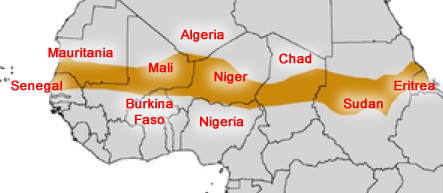
Gérard Chaliand (1980) explained the importance of Africa in the geopolitics of the Cold War era, listing resources such as diamond, gold, cobalt, vanadium, platinum, chromium, manganese, copper, uranium, and more. While these resources were essentially concentrated in countries of the southern part of the continent, none of which were colonized by France, gas and oil, phosphates, iron and uranium were located in countries of the Maghreb and western Sahara-Sahel, all of which, except for Libya and Western Sahara, were French possessions. Therefore, the area is of strategic importance for France. With regard to the United States in the Sahel region, all partners of the Trans-Sahel Counter-terrorism Initiative, announced by the G. W. Bush administration in 2005 and continued by the Obama administration as the Overseas Contingency Operations, are former French possessions except for Libya and Nigeria. In addition, western Sahel, where Tuareg irredentism takes place and where the presence of jihadi activists is salient, overlaps with both France’s traditional zone of influence and the US-led coalition of the willing against terrorism. Evidently, the nationalistic agenda of the Movement for the Liberation of Azawad in northern Mali neither coincides with the interests of France nor with the global ambition of al-Qaeda as, similarly, France’s national interests in the region are not in perfect harmony with the objectives, however complimentary, of the United States.

This paper will deconstruct the complex web of harmony and clash of interests that has led to increased militarization of the region.

Extremism, Conflict, Security, and the State in Africa – Call for Papers – Cornell Institute for African Development

The Cornell Institute for African Development (IAD) is holding a symposium on the theme,
“Extremism, Conflict, Security, and the State in Africa,” October 28‐29, 2016, on the Cornell University
campus. The symposium will explore the complex and multidimensional issues of development and
security in their broadest sense as well as the fundamental underpinnings of conflict through an interdisciplinary
approach. To read more, please click on the link.

Cornell Institute for African Development fall symposium (1)

Call for Papers Cornell Institute for African Develpment

Cornell Institute for African Development Call for Papers

The Cornell Institute for African Development (IAD) is holding a symposium on the theme, “Development, Religious Extremism, Conflict, Security, and the State in Africa,” rescheduled for October 21-22, 2016 on the Cornell University Campus. The symposium will explore the complex and multidimensional

Growing Democracy in Africa: Elections, Accountable Governance, and Political Economy

Front Cover 3-in-150dpi

Growing Democracy in Africa: Elections, Accountable Governance, and Political Economy

Edited by Muna Ndulo and Mamoudou Gazibo

What is the state of governance in sub-Saharan Africa? Is it possible to identify best practices and approaches to establishing political systems that promote accountability, transparency, peace, and civic space to all? These are the questions addressed in this book.

While the concept of governance is considered central to political science, our understanding of it is still imprecise, with extant studies focused primarily either on think-tank indicators, economic management, or political studies of democratization. This book critically examines the record on democratization in Africa thus far and seeks a new, integrated, focused approach to the study of governance.

Such an approach requires revisiting the concept of governance itself. In this volume, the editors have chosen to study the concept as it applies to accountability in four specific arenas: institutions and the rule of law; constitution-making, elections, and political conflict settlement; distribution of power and citizenship; and political economy and corruption.

With a huge and varied continent in rapid flux to study, the sheer amount and variety of interesting new research is enormous. It is expected that the discussions contained herein and the various challenges, achievements, and lessons outlined will contribute to research, inform teaching, and lead to a greater understanding of the issues of democratic consolidation and economic development in Africa.

Muna Ndulo (D.Phil., Oxford) is Professor of Law; Elizabeth and Arthur Reich Director, Berger International Legal Studies Program; and Director, Institute for African Development, Cornell University. He has served as consultant for organizations including the World Bank, the African Development Bank, and the Economic Commission for Africa. He has consulted on constitution-making in Kenya, Zimbabwe, and Somalia and has served as UN Senior Legal Advisor on numerous missions.

Mamoudou Gazibo (PhD, Comparative Politics, University of Montesquieu) is Professor of Political Science at the University of Montreal (Canada). He has been a consultant for international organizations including the African Union and the International Organization of Francophone States. He was chair of the constitution drafting committee in Niger and served as senior adviser to the Nigerien Prime Minister in 2010–11.

 http://www.cambridgescholars.com/growing-democracy-in-africa

L
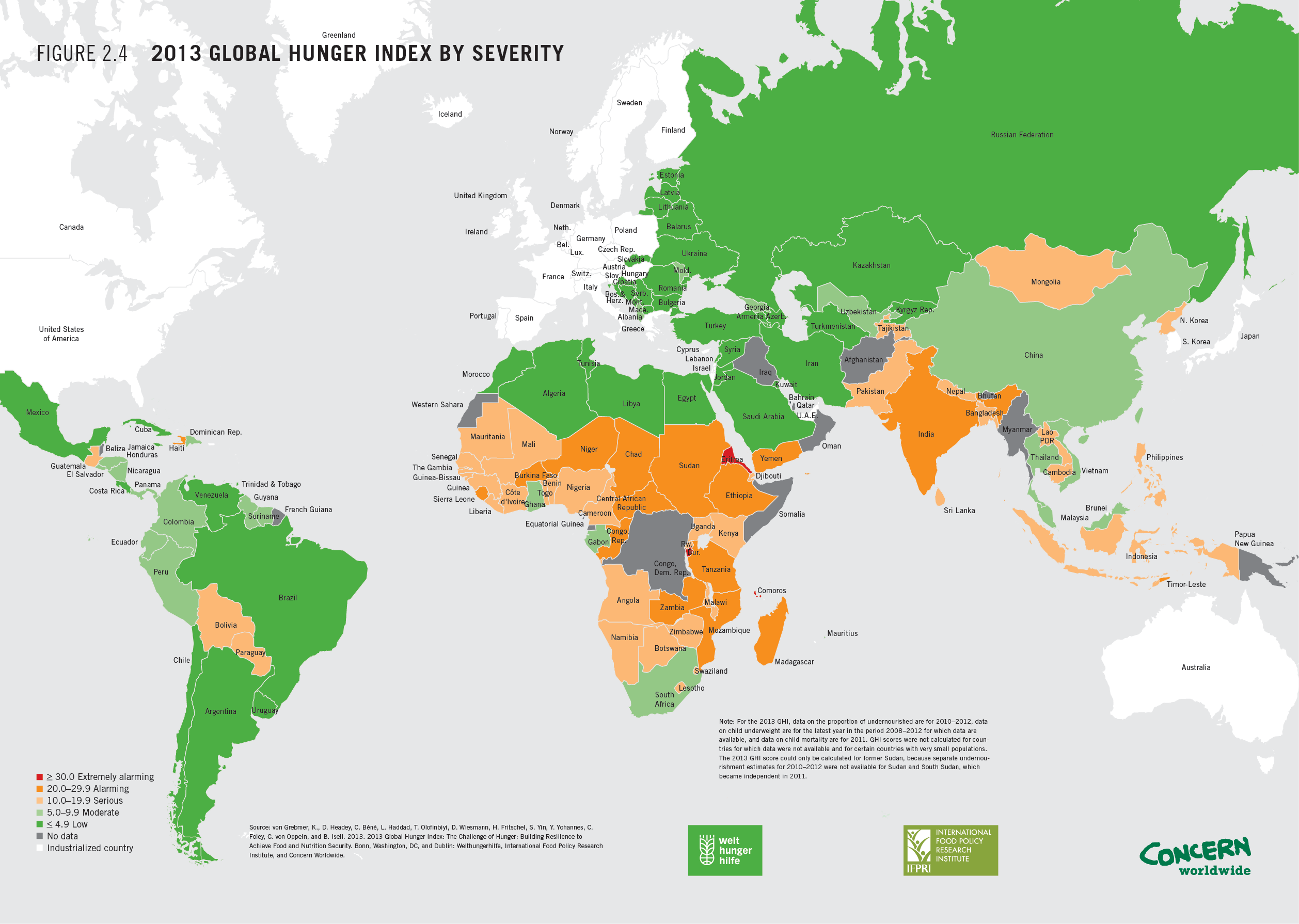
Africa South of the Sahara 2008-2011: Hunger as a Factor in Political Instability

2013 Global Hunger Index

Source: www.ifpri.org/ghi/2013

Between 2007 and 2008 spiking food prices sparked simultaneous riots in the Middle East, Latin America, Asia, the Caribbean and, to a greater extent, Africa, where more than a dozen countries experienced food related violence. In 2010-2011, inequities in resource distribution, including access to food, led to riots in many African countries. This article by Marcel Kitissou focuses on structural challenges to food security, presents competing views and weighs differences in reaction to economic crisis in Africa south of the Sahara.

Download JPAS 6.7-7Kitissou

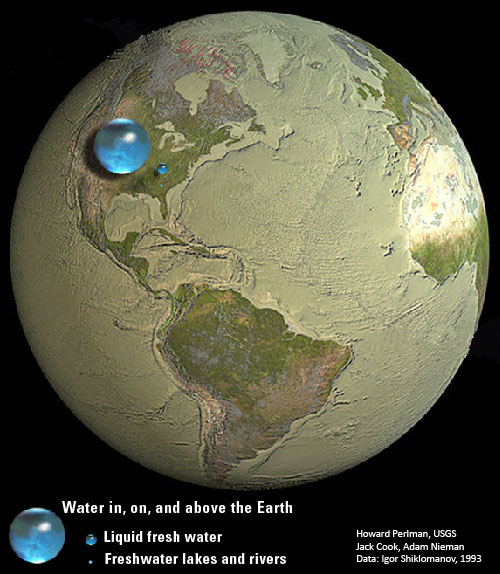
Water and Global Security

worlds-water-globe-kids-screen

Source: http://water.usgs.gov/edu/earthwherewater.html

The American intelligence community recently released a report warning that problems with water could destabilize various regions of the world over the next decade. The earth’s rising population, climate change, and poor water management are contributing factors. Please listen to discussions on Diane Rehm Show of April 3, 2012.

http://thedianerehmshow.org/audio/#/shows/2012-04-03/environmental-outlook-water-global-security/@00:00

Boko Haram: Islamist Insurgency in Nigeria

Boko Haram Islamic Insurgency in Nigeria 

The militant group Boko Haram has escalated its campaign of terror in northern Nigeria. Last year the Islamist fighters abducted nearly 300 school girls. Early this month they massacred hundreds in a border town near Chad in what Amnesty International says might be the group’s “deadliest act” so far. This week soldiers in the neighboring nation of Cameroon fought off a Boko Haram raid, raising fears of regional instability. The Nigerian government has been unable to quell the violence. Diane Rehm Show of January 14, 2015 discusses Boko Haram, the roots of the insurgency and what can be done.

And, also, listen to Adotei Akwei of Amenesty International on “All Things Considered,” January 16, 2015

http://www.npr.org/2015/01/16/377780839/satellite-photos-reveal-wider-destruction-in-nigeria