Category Archives: Uncategorized
Reflections on living and dying nations: Space and time in Africa geopolitcs
By Marcel Kitissou
© 2021 International Journal of African Studies. This is an open access article under
the CC BY license (https://creativecommons.org/licenses/by/4.0/), which permits unrestricted use,
distribution, and reproduction in any medium, provided you give appropriate credit to the original
author(s) and the source, provide a link to the Creative Commons license, and indicate if changes were made.
Abstract
This paper is a reflection on the influence of time and space on Africa in geopolitics. It
proposes that, while history, in the long-run is perceived as linear, in the short-term it is
granular. To make sense of events, one must connect the dots between cluster of times. The
analysis builds on the May 1898 statement of the former Prime Minister of the United
Kingdom, Lord Salisbury, assessing the geopolitics of his time as made of living nations and
dying nations. He characterized the living nations as having the tendency to encroach on the
territory of the dying ones. The statement implies a combination of geography and a
reference to biological processes with implication of space and the vicissitudes of time
involved. The processes of living and dying take time and imply occupying a space. As the
living states encroach on the territory of the dying, borders become, beyond their
internationally recognized physical demarcations, breathing, and living entities with expanding
(or shrinking) virtual borders. This concept is referred to as peri-corporal space in the
paper. To test this hypothesis, the United States’ international influence and the global
status China now enjoys are analyzed. Also, the de facto Franco-African state (Françafrique
lost its legitimacy due to a combination of events in the 1990s), as a typical case, is used to
illustrate when, why, and how the expansion of one nation’s virtual border reduces the
margin of action of other states.
Keywords: US, China, United Kingdom, France, Africa, Time, Space, Geopolitics
RETHINKING MILITARY RESPONSES TOTERRORISM AND INSURGENCY IN NIGERIA
RETHINKING MILITARY RESPONSES TO TERRORISM AND INSURGENCY IN NIGERIA
by Maurice Ogbonnaya
National Institute for Policy and Strategic Studies, Nigeria
November 2022
Since 2003, terrorist insurgency in Nigeria has occasioned complex security
and humanitarian crises, especially in the northeast region of the country. Boko
Haram, a radical Islamist group from the region, has killed over 30,000 people
and caused the displacement of more than 3 million others within the Lake Chad
Basin region. Military responses by the Nigerian state and in collaboration with
multilateral security agencies have achieved limited success. This paper not
only questions the adequacy of military responses to terrorism, as a standalone
approach, but it also advances the argument in the extant literature on the
obsolescence of excessive militarization of counterterrorism operations as a
security management strategy. It suggests the adoption of a more comprehensive
and broad-based strategic approach. This is predicated on the limitations of
purely military operations in counterterrorism, noting that military responses
alone are structurally not designed to deal with the fundamental root causes
of terrorism. In this regard, the paper advocates for a combination of military
and other non-military counterterrorism approaches that seek to address the
fundamental factors that give rise to terrorism.
To read more please go to https://www.ssrc.org/publications/rethinking-military-responses-to-terrorism-and-insurgency-in-nigeria/
Militarism and Socio-Political Changes in West Africa

Liquid globalization and inter-civilizational Dialogue

Liquid globalization and inter-civilizational Dialogue
The Western world is not only in relative decline, but also faces the inevitable ‘rise of the rest’ (Zakaria), as well as an increasing level of instability and unruliness in many parts of the world. Although there has already been a lot of research in post-colonial studies and intercultural communication, the binary code between the imaginary West and the multiplicity of non-Western approaches was yet to be resolved. Given the relative decline of the West, the dissolution of identities throughout the world, and the rise of the newly industrialized nations, there is an imminent urgency to address and overcome this binary code because it is not only situated in discourses but also manifested itself in all our living environment and within ourselves.
This approach is based on the assumption that the West, as well as the non-Western world, have their shares of dark sides in history. When it comes to the Western world, we cannot deny brutal colonialism, the religious wars, the two world wars, Auschwitz, and the sheer luck of averted atomic world war, which would have destroyed all living being. On the other side, there is often an unbearable degree of intra-societal violence in the Non-Western World. – peoples in a lot of countries face a living hell. For them, hell is not an afterlife. They experience it already in their own life.
As we are all living on one planet featuring more connectivity, we become more and more aware that there cannot be any more islands of prosperity, peace and well-being within a sea of violence, hatred, extreme poverty, and the dissolution of the fabric of societies. In some parts of the world, they experience something very close to the Hobbesian war of all against all, or Carl Schmitt’s never-ending civil wars between communities.
In order to cope with these developments, a dialogue about the civilization foundations of our world society is needed. I explicitly use the concept of civilization in the footsteps of Karl Jaspers, Shmuel Eisenstadt and Peter J. Katzenstein, because civilizations are much more inclusive than religions. This is particularly clear with civilizations that descended from religions. In my view, the contrast is based on that of the Western billiard game model versus the model of concentric circles. Of course, we can easily differentiate these models. For example, when the balls in the billiard game attract each other, we are in the theoretical domain of idealism and cooperation; if they push off each other we are in the realm of competition, conflict and war. And, of course, if the balls cooperate, we are in the realm of all kinds of institutionalism. But the main concept in this model is the importance of rule and methods. The model of concentric circles on the other side can be distinguished by the relation of centre, semi-centre, semi-periphery and periphery (by slight modification of proximity and distance to the centre). In case that we have a transfer of goods, people, ideas, raw materials from the periphery to the centre we label this imperialism, the other way round, from the centre to the periphery I’m tempted to judge this as a form of civilization.
Traditional forms of societies can be explained by overlapping circles of politics, societal relations, economy, economy and the environment:

In such a traditional society there is a great correspondence and overlapping of the different spheres – identity is based on an ostensible core and seems to be related to culturally determined values that were handed over from generation to generation.
A “modern” society (first modernity, Ulrich Beck) to the contrary can be characterized by the assumption that the different circles are much lesser overlapping, they are forming different spheres which have their laws and logics – we may label this a kind of functional differentiation (Niklas Luhmann) and it could either be characterized by the interaction and different functions of the organs of a body or the Olympic Rings.

The spheres in which these rings are overlapping are the institutions in modern societies like the state, the political system, law and the judicial system, the church as an institution, labour unions and civil society.
In liquid globalization and as a result of military interventions, civil wars, these rings of political, social, economic, and cultural and security spheres are separated from one another and could no longer be held together by a core identity.

Within this model, there is a sphere that remains blank and could be characterized as a kind of emptiness. In such an understanding the social fabric is increasingly dissolved and especially the young generation is set free from all social norms. This concept is able to overcome the binary alternative which characterizes the discussion about the causes of terrorism, whether these actions are either related to an aggressive ideology or the social disintegration in societies and failed states, as in the ring of fire around Europe, mainly in the Arab-Islamic states, but also in Africa as a whole. It also explains why identity and recognition count so much in a lot of conflicts throughout the world.
Based on this concept it becomes obvious that this emptiness can be filled with different content, for example with radical ideologies, private enrichments, drug, weapons and human trafficking, but also with the recourse to ethnic and even tribal identities, masculinity and patriarchy and finally violence itself which gives the excluded, superfluous (population growth) and uprooted young generation in these countries and regions the feeling not to be absolute powerless but all-powerful.
The rise of the others in a globalized world is inevitable (Zakaria) – our task is to develop forms of recognition that centre on the civilizational foundations of Islam, Buddhism/Taoism, Confucianism, Christianity and Hinduism and African kinds of solidarity.
The alternative to such a violent filling of the emptiness caused by liquid globalization is the mutual recognition of the civilizations of the earth. The rise of the others in a globalized world is inevitable (Zakaria) – our task is to develop forms of recognition that centre on the civilizational foundations of Islam, Buddhism/Taoism, Confucianism, Christianity and Hinduism and African kinds of solidarity. Only by recognizing their civilizational achievements, the uprooted, excluded and superfluous people of the world, which are the vast majority of mankind, can build an identity by their own in fluid globalization.
Assuming that we all are already living in such spheres which are not overlapping, producing a kind of emptiness, the two different solutions might be to solve this problem by constructing a core as identity, which leads to thinking in categories of we against the rest of the far-right, whereas a different attempt would be to develop a discourse in which identity is constructed as a kind of floating (Clausewitz) and progressing (Hegel) balance or harmony (Confucius), understood as unity with difference and difference with unity.
Andreas Herberg-Rothe
Dr Andreas Herberg-Rothe is an internationally recognized Clausewitz scholar, working as a senior lecturer at the faculty of social and cultural studies at the University of Applied Sciences, Fulda. He is teaching and doing research in the field of ‘Violence and Peace in World Society.’
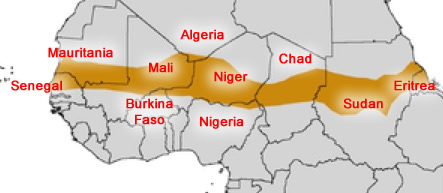
An Architecture of Complexity: The Challenges of Radicalization of Islam and Islamization of Radicalism in Western Sahel
Violent extremism and Jihadism in Western Sahel are the result of interlocking conflicts. Civil strife and regional (or global) conflict form a nexus. Conflict becomes intractable. And the inability of government to resolve normal social tensions, let alone the challenges caused by the effects of climate change, youth unemployment, poverty and food insecurity, make them open to intervention by outside players motivated more by geopolitical calculations than local concerns. Foreign players can be divided in two main categories.
Firstly, Jihadists, by exploiting local situations, can make civil strife more deadly than their own actions. Secondly, global powers use Africa as a surrogate terrain for their global power play. As this paper argues, this architecture of complexity leads to the conclusion that there is no one terrorism in the Sahel but many and each requires a different approach. By the same token, the theoretical debate about whether we are witnessing a radicalization of Islam or an Islamization of Radicalism is irrelevant. This paper argues that there a continuum between the two extremes.
Marcel Kitissou
Read the full article here!
EndSARS Protest: More than a Call for Security Sector Reform in Nigeria?
By Maurice Ogbonnaya
Shortly after Nigeria’s 60th Independence Anniversary celebration on October 1, 2020, nationwide protests fueled by demands to reform a dreaded unit of the Nigeria Police Force (NPF), the Special Anti-Robbery Squad (SARS), broke out in several major cities across the country. Largely staged by the youth, and trending on social media, the #EndSARS protests started on October 5, 2020 following the killing of a young man in Ughelli, Delta State by operatives of SARS. By October 10, 2020, the street protests had spread across the country. The protests have also gone global with solidarity protests held in Accra, Frankfurt, London, Toronto, and Washington DC,1 attracting Nigerians in the diaspora and persons of note, including music and sports stars like Wizkid, Drake, Kanye West, Mesut Özil, and Alexander Iwobi,2 among others, demanding an end to police brutality in Nigeria.
The protests are the result of pent up frustrations following years of human rights violations, extortion, torture, brutality, and extra-judicial killings by SARS operatives and the police in general. Established as a special unit of the NPF under the Force Criminal Investigation and Intelligence Department (FCIID) in September 1992, SARS was formed to investigate, detain, and prosecute people suspected of involvement in high caliber crimes such as armed robbery, motor vehicle theft, kidnapping, cattle rustling, and illegal possession of firearms. In 2018, its operational jurisdiction was expanded to include cybercrime.3
To read more go to
Deconstructing the Westernization of Africa: Pawn or Player in Global History?
This is a presentation by Marcel Kitissou at a symposium organized by the Department of Africana Studies at the University at Albany on October 23, 2019 in commemoration of “400 Years of Inequity” and of the celebration of the Department’s 50th anniversary. The main argument of the presentation is that, without the West, Africa would be less westernized (or at least in its own terms) but certainly more modernized. In Africa south of the Sahara, unlike any other parts of the world, the colonizer “decolonized” but never left. Therefore, “westernization,” as can be observed today, is not a free choice. With the constant presence, and constant control by the West (Francophone Africa particularly), Africa is more westernized than modernized. Westernization, in its current form in Africa, is likely to perpetuate dependency and prevent Africa from being a global power player as was the case in the past. Read more at
Lessons from countering the corona virus for war and violence – containment, common security and cooperation.
Lessons from countering the corona virus for war and violence –
containment, common security and cooperation
Andreas Herberg-Rothe
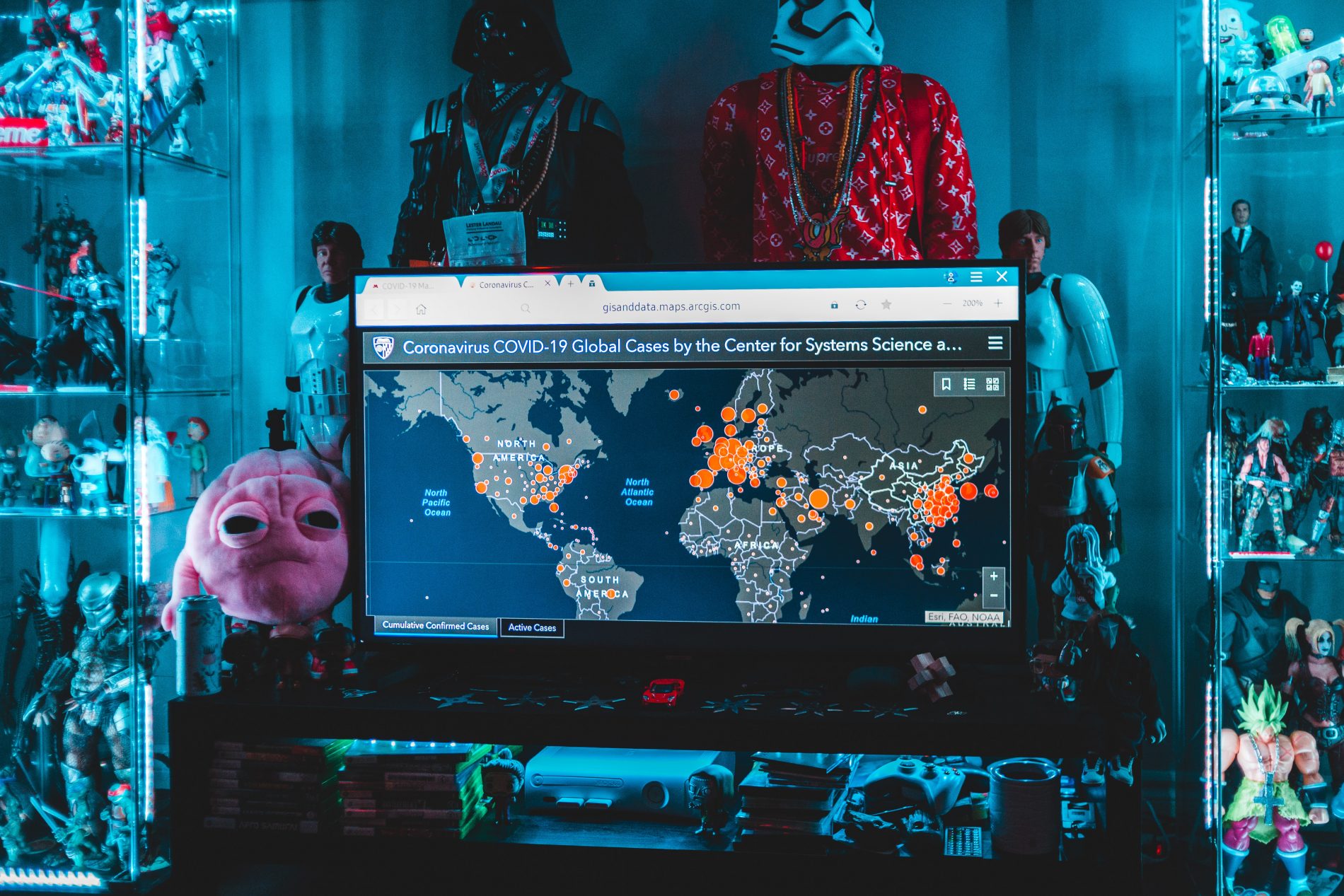
The initial measures against the spread of the new corona-virus could be summarized by one word – containment of the virus and hindering its spreading.
The world is engulfed in the ‘Corona Virus’ pandemic. As national health
systems are being stretched to their limits, countries are closing their
borders, banning travel, and isolating themselves…all in an
international co-operative strategy to contain its spread and eliminate
this pandemic.
Andreas Herberg-Rothe sees valuable lessons in this international
co-operation to be used to contain war and violence. Taking a leaf out
of the broad ‘containment theory’ articulated by the late George Kennan
in an anonymous article published in 1947 in the FP magazine, Andreas
proposes a containment strategy for the world from the scourge of
terrorism, religious fanaticism, and wars for world dominance (both
proxy as well as interventions). This strategy for ‘common security’ can
succeed only if it respects pluralism of cultures, religions, and social
orders…
M Matheswaran.
The complex nature of conflicts in Africa needs to be considered in the design of better projects.
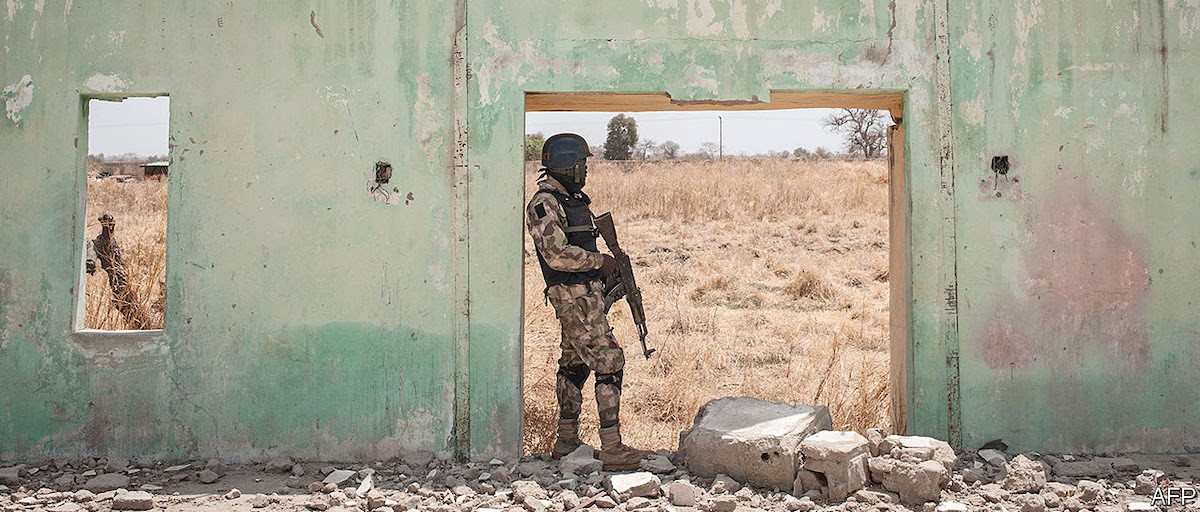
Rooting out corruption in the security sector will help the country address its growing terror threat.
04 FEB 2020 / BY MAURICE OGBONNAYA
Despite massive expenditure by the Nigerian government over the past decade, counter-terrorism operations by security forces have achieved limited success and the country is still ranked on the Global Terrorism Index as one of the states most affected by terrorism. Is the problem one of bad policy, strategy and tactics, or is corruption in the leadership ranks of the security forces also to blame?
It is estimated that terror groups have killed over 30 000 people in Nigeria since 2003, causing the displacement of more than 2.4 million people. These groups include Boko Haram, operating in the Lake Chad Basin region, Islamic State West Africa Province (ISWAP) and Ansaru, also called al-Qaeda in the Lands Beyond the Sahel.
In December 2019, ISWAP beheaded 11 Christian hostages to avenge the killing of Islamic State leader Abu Bakr al-Baghdadi by United States forces. In January this year the group killed the chairman of the Adamawa State chapter of the Christian Association of Nigeria, Lawan Andimi. It also kidnapped three university lecturers in Yola in eastern Nigeria, and carried out several coordinated attacks in Borno State.
Nigeria’s government allocated over N6.7 trillion to the security sector between 2010 and 2017 to strengthen its capacity for counter-terrorism operations. This amount doesn’t include extra budgetary allocations such as the US$1 billion the government borrowed in 2013 to fund counter-terrorism operations and the US$21 million approved for the Multinational Joint Task Force (MNJTF) in June 2015.
The secrecy surrounding military spending for counter-terrorism encourages misappropriation
Despite increased money for the security sector, counter-terrorism operations by the Nigerian military in collaboration with multilateral agencies such as the MNJTF of the Lake Chad Basin Commission have achieved limited success. The military did for a time succeed in pushing terrorist groups out of major cities, as was seen when the frequency of attacks in urban centres dropped between late 2015 and early 2018.
However, terror groups found operational bases in the large civilian populations in rural and remote areas from where they launched a barrage of attacks on poorly secured villages, military units and critical state infrastructure. After suffering a ‘technical defeat’ by the military in three local government areas in Borno State, a resurgence by extremists has given them control of these regions.
Why are Nigeria’s counter-terrorism operations failing? Some say it’s because of strategic and tactical imprecision due to poor intelligence and rivalry among security agencies involved in the operations. However, evidence suggests that corruption in counter-terrorism operations in Nigeria may also be to blame.
Conflict entrepreneurs within the hierarchy of military leadership and the ministries, departments and agencies in the security sector apparently use military funds meant for counter-terrorism operations to enrich themselves. Military spending is usually not audited due to its sensitive nature. The secrecy that surrounds it encourages misappropriation.
Unless conflict entrepreneurs are stopped, terrorism will continue in Nigeria and the Lake Chad Basin
Examples include the probe into the alleged diversion of US$2.1 billion meant for arms procurement by the Office of the National Security Adviser, and another N3.9 billion by the office of the Chief of Defence Staff, both in 2015.
In 2017, US$43 million cash meant for covert operations by the National Intelligence Agency was discovered in a private building in Lagos. And in 2018 there were investigations into US$1 billion that went missing after being appropriated to the Nigerian Army for arms procurement from the Excess Crude Account.
Conflict entrepreneurs in the security sector also allegedly operate through the award of fictitious procurement contracts, and illegal extra-military activities such as extortion and collusion with militants in illegal fishing in the Lake Chad area.
These activities undermine effective security force action by hollowing out the military’s capabilities. For instance, because they don’t procure by approval, and sometimes procurements aren’t even made, the military may be lacking in weapons and logistics, making it difficult to adequately counter terrorism.
Corruption has undermined effective security force action by hollowing out the military’s capabilities
Despite huge financial allocations for arms procurement and logistics supplies, military sources blame the death of 83 soldiers in a 2016 Boko Haram ambush and a similar 2018 attack on the 157 Task Force Battalion in Metele, Borno State, on equipment shortfalls, poor weapons and logistics supplies, and low morale among combatant officers, who sometimes aren’t paid. Over 118 soldiers including the battalion commander died in the attack.
This failure of counter-terrorism operations may account for the resurgence of terror attacks in Nigeria’s north-east, especially Borno State. And despite significant financial allocations for these efforts, the terror threat in Nigeria remains huge.
Questions need to be asked about whether counter-terrorism funding is being used wisely, and whether the operations themselves are effective. Unless Nigeria’s government stops the activities of conflict entrepreneurs, violent extremism will probably remain a major security threat in Nigeria and across the Lake Chad Basin region.
To do this, the state needs to strengthen legal and institutional frameworks for dealing with corrupt practices in the security sector, especially in counter-terrorism operations. It also needs to investigate and prosecute those who have taken advantage of their positions in the counter-terrorism campaign to enrich themselves.
Most fundamentally, a strategic change in the leadership of the military may be needed, along with a rethink of the excessive militarisation of counter-terrorism operations in the country’s north-east zone.
Maurice Ogbonnaya, Senior Research Consultant, ISS Pretoria
In South Africa, Daily Maverick has exclusive rights to re-publish ISS Today articles. For media based outside South Africa and queries about our re-publishing policy, email us.
 The Sahel Consortium