The 2015 Presidential Elections in Nigeria: The Issues and Challenges

In Foresight Africa Report 2015, published by the Brookings Institution in January 2015, Dr. Jideofor Adibe reviews the issues, gives the political background of the candidates and their parties and explains the complexities of the 2015 presidential election in the continent’s most populous country and biggest economy.

For Dr. Adibe, this presidential election is crucial for the survival of Nigeria as a nation and for the stability of the region.

Please click here to download the entirety of the review provided by  Dr. Jideofor Adibe.


Call for Papers New York African Studies Association 2015 Annual Conference

Chinua-Achebe-With Ali-Mazrui-at-Achebe-Colloquium-On-Africa
40th ANNUAL MEETING of the

NEW YORK AFRICAN STUDIES ASSOCIATION
3-4 April 2015
CALL FOR PROPOSALS / ABSTRACTS
DEADLINE: 01 December 2014

A special three-college conference in the capital of New York State will mark the 40th conference of the New York African Studies Association. On 3-4 April 2015 Albany College of Pharmacy and Health Sciences, Union College in Schenectady, and Albany Law School will host “Africa, Its Diaspora, and Laws.” For this conference, “laws” will be defined in the broadest sense that includes in addition to the usual definitions of statutory, common, indigenous, religious, and constitutional law, laws of science, “social Darwinism,” economic laws (Adam Smith, neoliberalism, trade laws, etc.), literary canon law, biological “laws” of health, the court of public opinion and “social laws.” NYASA 2015 welcomes proposals for presentations, panels, posters, and roundtables that address topics of race, ethnicity, gender, sexuality, identity, nationalism, health, religion, spirituality, politics, arts, economics, science, performance, and other pertinent topics.

NYASA, founded in 1967 as the SUNY African Studies Faculty Association, is a nonprofit membership association, incorporated as NYASA in 1975, dedicated to advancing the discipline of Africana Studies. NYASA is open to all with an interest in Africa and the Diaspora. As a regional organization, the New York African Studies Association promotes the visibility and advancement of the discipline in New York State and surrounding areas, offers opportunities for scholarly and professional development of educators, and provides enhanced education for community members, leaders, and activists. Other topics for papers will be considered, as will proposals to organize panels and to promote student participation. By 1 December 2014 please send abstracts of not more than 150 words to the Local Organizing Committee at
nyasa2015@gmail.com
or
NYASA 2015 Organizing Committee
c/o Kevin Hickey
Albany College of Pharmacy and Health Sciences
106 New Scotland Ave.
Albany, NY 12208

The Sahel: The Role of the Private Sector in Regional Development and Integration

The Sahel – Role of Private Sector in Regional Integration

In this article, Malan Rietveld and Aniket Shah provide interesting economic data about the Sahel, discuss the contribution of the private sector to the development of the region, and propose strategies for regional integration.

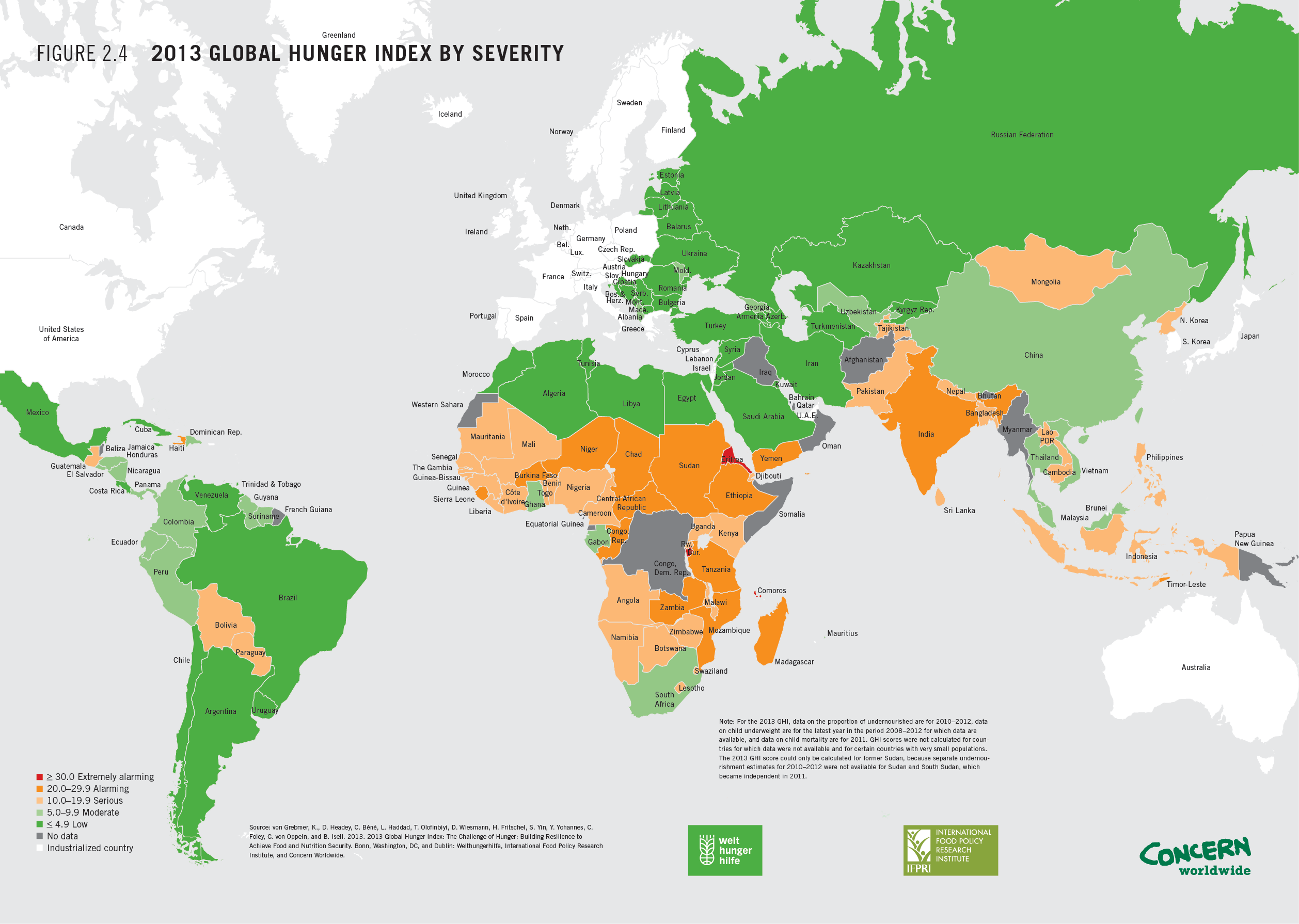
2013 Global Hunger Index

The Sahel: Focus of Hope, Focus of Fear

Sahel Book Cover

Edited by Marcel Kitissou and Pauline E. Ginsberg

The Sahel is a critical zone of convergence. Geographically, it links two oceans and three seas. Itself a semi-arid corridor, it functions as a giant dry river that traverses the central-north of Africa from coast to coast, demarcating the transition between the Sahara desert and the savannah. Across the land and the water came traders and adventurers seeking goods and power, bringing ideas, opportunities and challenges, sometimes, as with slavery, inflicting heavy damage upon flourishing institutions. 

Always rich in human diversity, bringing into contact North Africans and sub-Saharan Africans, West Africans and East Africans long before others came from outside the continent, in the Sahel cultures mixed, not always comfortably. And so they continue to mix even now. Indigenous religions met Islam, imported from the Arabian Peninsula, and Christianity from the Middle East by way of Europe.

Often violent encounters across the Sahara between the largely animist indigenous Africans and MuslimArabs from North Africa, the Mediterranean and the Arabian Peninsula significantly shaped and still animate the socio-political landscape of the region. The Sahel has been the focus of dreams of wealth and power for centuries, during which the objective of overthrowing existing forms of governance to usher out the invader or colonizer and usher in a new order that is solicitous of the welfare of the people has served as the motive for many revolutions and rebellions and is the case of many Sahel countries today.

Against a background of seemingly unending encounters, from the Fossatum Africae (the African Trench) in time of the Roman Emperor Hadrian to today’s Mali, with powerful global currents which have often convulsed and created unwelcome dislocations in their society, the people of the Sahara-Sahel have found ways to adapt and cohere their indigenous systems to the new. This volume’s contributors illuminate the past with conscientious scholarship while bringing the reader’s pinpoint focus clearly into the present. Their work seeks new solutions to ongoing Sahelian problems that neither neglect the past nor are strictly limited to Sahelian applications.   

The chapters balance fear against hope: Fear that defenses against the ravages of climate change will be too little and too late; fear that help offered to former colonies will lead only to re-colonization; fear of lawlessness and exploitation by international criminal elements; fear of religious strife of heretofore unknown intensity on the African continent.

And hope: Hope that African governments will work in unity to solve shared problems; hope that past indigenous methods of conflict resolution and agriculture, for example, can be brought to bear on present problems; hope that international cooperation with former colonizers and current investors can be achieved without domination and rebuild, as in the best of the past, a tolerant and flourishing society.

Pauline E. Ginsberg, PhD, Professor Emerita of Psychology at Utica College also taught at the University of Nairobi including a Fulbright Fellowship in 2002. She co-edited The Handbook of Social Research Ethics (Sage, 2009) with Donna M. Mertens and has researched and published on the topics of adolescent development, cross-cultural research methodology, US and Kenyan mental health systems and refugee resettlement.

Marcel Kitissou, PhD, is a Visiting Fellow with the Institute for African Development at Cornell University and a founding member of the International Consortium for Geopolitical Studies of the Sahel. His research focus is on the interface of local and global politics, particularly international security, food security, and the politics of water in Africa. Lifelong advocate for social justice and human rights, he serves on the Board of Directors of Amnesty International-USA.

© 2013 The Sahel Consortium

The Moral Economy of Hunger: Lessons from the US and the Sahel

Author: Marcel Kitissou

Marcel provocatively charts the cartography of hunger in Sahelian Africa and the United States to challenge dominant representations of the spaces of hunger and in the face of the proliferation of hunger calls for a “moral economy” that can reconcile “personal responsibility (oikos) and social solidarity (polis).”

>> The Moral Economy of Hunger-Lessons from the US and the Sahel  (pdf download)

© 2013 The Sahel Consortium

Governance and Conflict in the Sahel’s ‘Ungoverned Space’

Stability: International Journal of Security & Development, 2(2): 2013, pp. 1-17.

Authors: Clionadh Raleigh and Caitriona Dowd

This article concerns governance and vio­lence rates across the ‘ungoverned’ spaces of the African Sahel. We consider how the dominant narrative for Africa generally, and the Sahel specifically, ‘securitizes’ space, and presents poverty, underdevelopment, and ‘ungoverned’ spaces as security threats to be addressed (Abrahamsen 2005; Keenan 2008).

>> Governance and Conflict in the Sahel’s ‘Ungoverned Space’ (pdf download)

How will Algeria reinvent Itself?

Notes internacionals CIDOB, núm. 74

Author: Francis Ghilès

Ghilès deftly survey’s the political and economic challenges that Algeria – Africa’s largest country – will face after president Bouteflika’s departure.

>> How will Algeria reinvent Itself? (pdf download)

Francis Ghilès, Senior Research Fellow, CIDOB

© 2013 CIDOB Foundation